The Complete Guide to AIARE Avalanche Courses in Colorado
The American Institute for Avalanche Research and Education (AIARE) is a nonprofit educational organization dedicated to saving lives through avalanche education. Founded in 1998, AIARE was created to develop a consistent, research-based approach to avalanche education for people traveling in the backcountry. Today, AIARE has one of the most nationally recognized and standardized avalanche curriculums in the United States. Through the review and approval of the American Avalanche Association (A3), AIARE trains instructors and avalanche professionals, and works with a network of course providers to educate recreational backcountry users across the U.S. and internationally.
In the winter of 2026-7, Colorado Adventure Guides taught more students snow safety in Colorado using the AIARE curriculum than any other provider.
When you “take an AIARE course,” you’re being taught a standardized curriculum from an AIARE-approved provider, like Colorado Adventure Guides. The standardization of AIARE education helps ensure that regardless of where or when you take a course, you’re learning the same core concepts and terminology thus giving you a common foundation with others in your touring party and making it easier to build on that knowledge as you continue your avalanche education. It teaches a repeatable way to plan trips, recognize avalanche terrain, make decisions as a group, and rescue a buried partner.
This guide explains each AIARE course, who it’s for, and how to choose where to start. That applies whether you’ve never skinned uphill or you’re weighing your next step after AIARE 1.
In this guide
What Is AIARE, and What Role Does It Play in Avalanche Education?
AIARE was created as a 501(c)(3) nonprofit to build an evidence-based avalanche education model for backcountry travelers, grounded in the belief that education, research, and training can prevent avalanche injuries and deaths. Its founders were mountain guides who saw that avalanche knowledge varied widely depending on who had taught it. A standardized curriculum was their answer.
AIARE writes the curriculum, and trains and certifies the instructors. Those instructors then work for AIARE course providers teaching the recreational curriculum. The recreational curriculum is taught by roughly 110 to 120 providers, including guide services, outdoor clubs, ski resorts, and universities; and you book directly with a provider. Colorado Adventure Guides is one of those providers, operating from two basecamps in Silverthorne and in Dumont near Idaho Springs.
A3 is also a nonprofit organization, but they establish and maintain the professional standards for avalanche education and operations in the United States. A3 acts as the governing body setting the minimum guidelines for course content, instructor qualifications, and professional practices, which ensures that avalanche education programs meet minimum consistent standards for quality, safety, and competency. They do not develop curriculum or train instructors. AIARE is a separate nonprofit whose standardized curriculum meets or exceeds A3 guidelines. Every AIARE instructor is at least an A3 affiliate member, and course leaders are A3 professional members.
Is an AIARE course a certification?
Not on the recreational side. Recreational courses in the U.S. have no exam, so completing one earns a “certificate of completion” rather than a formal “certification.” While AIARE certificates don’t expire, AIARE strongly recommends revisiting courses every couple of seasons, especially Avalanche Rescue. AIARE’s professional-track courses, by contrast, are certifications.
SETS THE STANDARD
American Avalanche Association (A3)
Minimum guidelines for course content, instructor qualifications, and professional practices.
WRITES THE CURRICULUM
AIARE
A standardized curriculum that meets or exceeds A3 guidelines, plus instructor training and certification.
TEACHES THE COURSE
Course providers
Roughly 110 to 120 guide services, clubs, resorts, and universities. You book with them directly. Colorado Adventure Guides is one.
ONE CAUTIONARY NOTE
No course, AIARE or otherwise, makes traveling through avalanche terrain in the backcountry “safe.” Good avalanche education gives you three things:
A shared language with your partners
A structured way to make decisions
The skills to act if something goes wrong
The mountains don’t grade on a curve, and education is where you start managing risk, not where you finish.
Who Should Take Avalanche Training in Colorado?
AIARE’s answer is intentionally broad. It describes AIARE 1 as a course for anyone who wants to travel in or near avalanche terrain, no matter how they get there.
Hut Trip Groups
Snowshoers
Winter Hikers and Ice Climbers
Backcountry Skiers and Splitboarders
Snowmobilers and Hybrid “Sled-and-Ski” Riders
Resort Riders Who are Tempted by Backcountry Access Gates
You don’t have to be skiing steep lines to be exposed. Many Colorado trails, hut approaches, and winter routes run beneath slopes steep enough to slide. Our post Are you in avalanche terrain? covers this in more detail for snowshoers.
Colorado Adventure Guides runs AIARE 1 courses in several travel modes. It offers a snowshoe-based AIARE 1 alongside ski and splitboard formats. It also offers a motorized/hybrid AIARE 1 in partnership with Powder Pro Lab, which runs courses out of Leadville.
AIARE 1 vs. Avalanche Rescue vs. AIARE 2 vs. the AIARE 1 Refresher
AIARE’s recreational program centers on four courses. Here’s how they compare, with prerequisites as AIARE publishes them:
| Course | Length | Best for | Main focus | AIARE prerequisites |
| AIARE 1 | 3 days (24 hours) | Your first formal avalanche course | Trip planning, identifying avalanche terrain, using the forecast, group decisions, companion rescue, and understanding snowpack formation and hazardous conditions | Able to travel in or near avalanche terrain with proper snow-travel gear; nothing else |
| Avalanche Rescue | 1 day | Everyone, from first-timers to experienced travelers | Transceiver, probe, and shovel skills; realistic scenarios; timed practice with coaching | Able to travel on snow with proper gear; nothing else |
| AIARE 2 | 3 days | People who plan trips and lead small groups | Where specific hazards exist, interpreting weather/snow/avalanche observations, a basic forecasting framework, leadership, addressing uncertainty | AIARE 1 and Avalanche Rescue, plus at least a season of backcountry experience |
| AIARE 1 Refresher | 1 field day plus online pre-work | AIARE 1 grads who haven’t practiced formally in a few seasons | Planning and leading a tour with the AIARE framework, rescue practice, a plan for continued learning | AIARE 1, Avalanche Canada AST 1 + MAT, or a comparable 24-hour intro course |
Where Colorado Adventure Guides’ requirements differ
Providers can set requirements beyond AIARE’s minimums, and Colorado Adventure Guides does.
- AIARE 1: Students must already know how to use their touring gear or mode of travel and be able to travel off-trail in ungroomed snow for extended periods of time. For skiers and splitboarders, they must also be able to ride steep blue to black resort terrain comfortably.
- AIARE 2: Students need a Level 1 course (AIARE or AAA equivalent course) with a year of experience applying learnings, plus the one-day AIARE Avalanche Rescue course.
Always check the specific course page before booking.
Which Course Should a First-Time Backcountry Traveler Take?
For most people, the answer is AIARE 1. AIARE says either AIARE 1 or Avalanche Rescue is a good starting point for anyone new to backcountry decision-making.
OUR RECOMMENDATION
First-time backcountry travelers on skis or splitboards: start with a 1-day Intro to Backcountry Skiing & Splitboarding course. Start with AIARE 1 if you are on snowshoes, or have already been out practicing skinning technique and transitions on your touring gear.
Taking Avalanche Rescue first can make sense in two situations:
- Your first backcountry days this season will be with a guide.
- The AIARE 1 dates you need are full.
Either way, plan to complete both courses within your first season or two. Rescue skills fade, and Rescue is required before taking AIARE 2.
Where Intro to Backcountry Skiing & Splitboarding Fits
AIARE 1 is an avalanche course, and is not intended to teach how to use touring equipment. Two of its three days are spent touring in the field. If you’re still fighting your bindings at every transition, you’ll be concentrating on your gear, not the coursework.
That’s where the Intro to Backcountry Skiing & Splitboarding course fits. It’s a one-day course covering two major areas. You will learn about skins, transitions, kick turns, and track setting; and avalanche awareness and rescue gear will be introduced. It requires no backcountry experience, though students still need to ride steep blue to black resort terrain comfortably. Colorado Adventure Guides strongly suggests taking this course before AIARE 1 for anyone new to backcountry skiing. A three-day, two-night, hut-based version is also offered.
The Intro course prepares you for AIARE 1. It doesn’t replace it.
What You’ll Learn in AIARE 1
By the end of AIARE 1, AIARE expects students to be able to do four things: create a plan for traveling in a backcountry environment, identify avalanche terrain and understand what creates hazardous snowpack conditions, use the AIARE Risk Management Framework to make informed decisions and choose terrain as a group, and carry out an effective companion rescue. Here’s what each of those means in plain language.


AIARE 1 formats in Central Colorado
Colorado Adventure Guides runs AIARE 1 in these formats:
- Summit County
- Front Range, with terrain including Loveland and Berthoud Pass
- Lift-access, with field days at Winter Park. You still need touring gear, and lift passes aren’t included.
- Snowshoe
- Hut-based
- Splitboard specific
- Women’s specific
The hut-based AIARE 1 adds the experience of running a winter hut trip. Riders who access terrain by sled can look at the Motorized/Hybrid AIARE 1.

What the AIARE Avalanche Rescue Course Covers
AIARE designs the one-day Rescue course for new and experienced recreational travelers as well as aspiring professionals. Students learn what to do if they or a partner is caught, how to use rescue gear, and how to set up realistic practice scenarios. They also work on improving their response times with instructor and peer feedback, and they leave with a plan for continued practice.
At Colorado Adventure Guides, it’s an eight-hour day. Students work on advanced topics such as multiple burials, advanced transceiver functions, and evacuation considerations.
The course can also be paired with Wilderness First Aid. Colorado Adventure Guides offers a combined AIARE Avalanche Rescue and 16-hour Wilderness First Aid option aimed at winter backcountry users. Finding and uncovering a buried partner is only the first half of a rescue. Caring for them afterward, often hours from outside help, is the second half.
Why rescue skills need regular practice
Companion rescue happens under intense time pressure and stress, and the skills fade quickly without use. AIARE recommends that all backcountry travelers retake Avalanche Rescue at least every other year.
OUR TAKE
Treat that as the minimum. Also do these between courses:
– Run a transceiver drill with your partners at the start of every season and multiple times throughout the season.
– Check every transceiver at the trailhead, every trip.
– Practice probing and strategic shoveling often.
When Is the AIARE 1 Refresher the Right Choice?
The AIARE 1 Refresher is a one-day, field-based course for people who already have avalanche training and want to knock off the rust. After online pre-work that revisits core concepts, you spend a full day in the field with an AIARE-qualified instructor. You plan and lead the tour while your instructor mentors, practicing each step of the AIARE Decision-Making Framework: Prepare, Plan, Ride Safely, Teamwork, and Debrief.

Who the Refresher is for
AIARE’s progression suggests taking it three or more seasons after AIARE 1. It’s also a smart choice if:
- Your habits have slipped. You still know what a persistent slab is, but you’ve stopped writing a plan or debriefing.
- You have new touring partners. A new group is a new decision-making system.
- You learned on a different snowpack. Maritime, Eastern, or European training doesn’t match Colorado’s shallow, long-memory continental pack.
- Your rescue skills are rusty. The day includes at least one timed companion rescue scenario.
Who should start elsewhere
If you’ve never taken a formal avalanche course, start with AIARE 1. If you want deeper snowpack analysis or complex terrain, AIARE 2 is a better fit. If you want multiple-burial practice, take Avalanche Rescue.
The AIARE 1 Refresher is a mentored way to practice it before the season starts. Groups are capped at six students per instructor.

When Are You Ready for AIARE 2?
AIARE positions AIARE 2 for backcountry leaders who want to advance their avalanche knowledge and decision-making in new terrain and situations. By the end of the course, students should be able to pinpoint where specific hazards exist in the landscape, recognize terrain where consequences are more severe, and use weather, snow, and avalanche observations to choose terrain before and during a trip.

Signs you’re probably ready:
- You’ve toured a full season or more since AIARE 1 and used its framework on real trips.
- You’re usually the person planning the day.
- Reading the CAIC forecast feels routine.
- You’ve practiced rescue recently.
- You want to further understand why the snowpack behaves as it does.
If you’ve barely toured since AIARE 1, the AIARE 1 Refresher is likely the better next step. Colorado Adventure Guides built its Refresher for students who finished Level 1 or Rescue but aren’t yet ready for AIARE 2.
Colorado Adventure Guides runs AIARE 2 in classroom, hut-based, or snow-camping formats. The hut-based courses are open to skiers and splitboarders, and the gear list adds a 50L+ overnight pack, a sleeping bag, and a snow study kit.
Do recreational users need AIARE 2?
Not necessarily. For many recreational travelers, a solid program looks like this:
- AIARE 1
- Avalanche Rescue, kept current
- Periodic AIARE 1 Refreshers
- Steady, conservative mileage
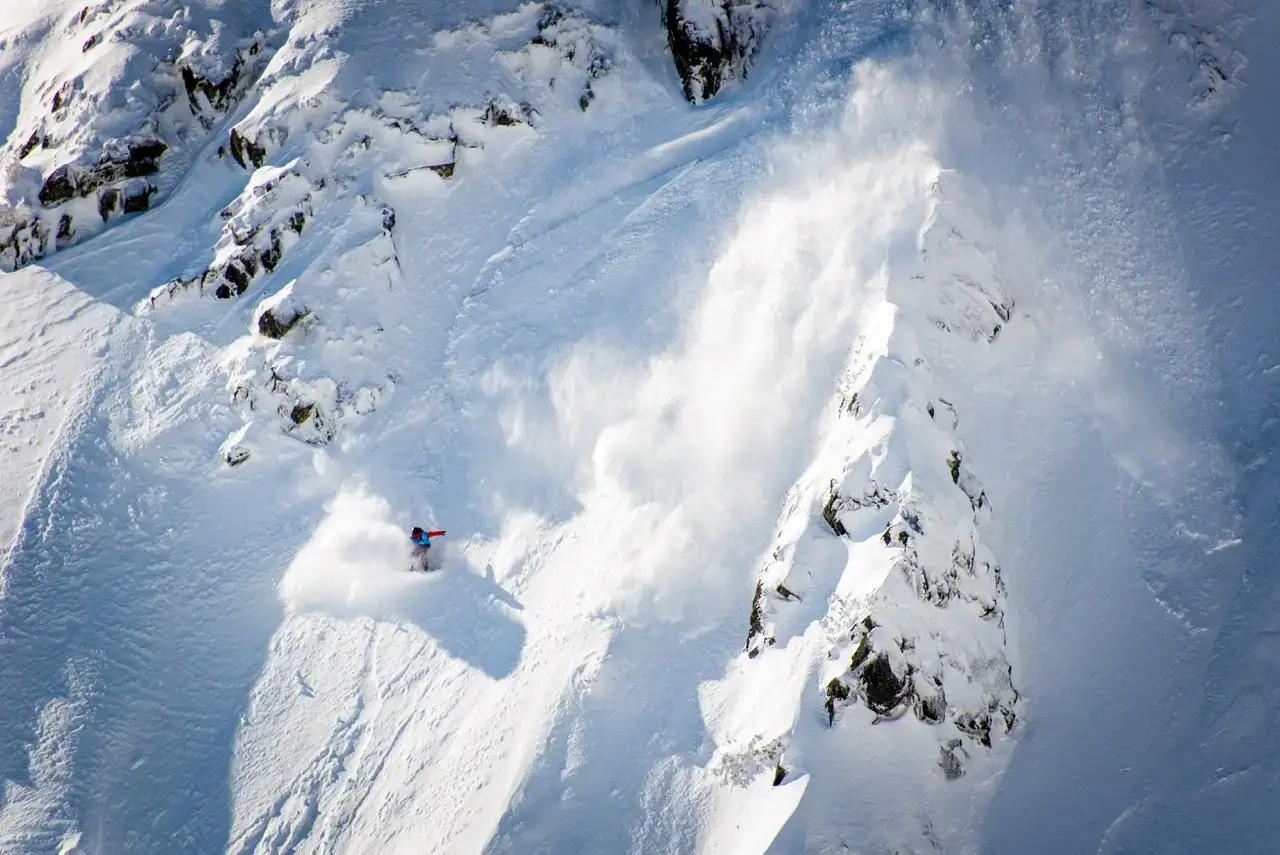
Photo credit: Kristen Smith (@kscrilla)
AIARE 2 is most valuable if you regularly lead others or want to travel with less reliance on the published forecast. The AIARE 2 is also a great course for coached mentorship of your processes and habits, and a way to gain further insight into understanding sources of uncertainty and how to close those gaps.
What to Expect Before, During, and After a Course


What to Do After Your Course
Read the CAIC forecast daily, even on days you’re not touring, so the language becomes second nature.
Keep your first season conservative. Choose low-angle terrain away from slide paths and runout zones.
Tour with trained and trusted partners who share your framework.
Debrief every trip, including the uneventful ones.
Practice rescue throughout the season. Retake Avalanche Rescue at least every other year.
Consider Wilderness First Aid, the AIARE 1 Refresher, and eventually AIARE 2.
What Gear Do You Need?
Separate your gear into two categories. Always confirm the exact list on the current course page and the Backcountry Packing List.
Avalanche rescue equipment
Every person needs a transceiver (beacon), a probe, and a shovel, on every trip. What’s included depends on the course:
Winter travel gear
To move on the snow:
For AIARE 1, Colorado Adventure Guides lists a minimum of a 30L pack. AIARE 2 in a hut or camping requires a 50L+ overnight pack.
Renting
Colorado Adventure Guides rents backcountry gear from its Silverthorne basecamp. See the rentals page for details.
OUR TAKE
If you plan to keep touring, buy rescue gear you’ll practice with.
WHY LOCAL INSTRUCTION MATTERS
How Colorado’s Snowpack Shapes Avalanche Education
Colorado’s snowpack often develops persistent weak layers, which are fragile layers of snow that can stay reactive for weeks. The CAIC explains why these are so hard to manage. Persistent slabs are often triggered remotely, including from flat ground. Fractures can spread across ridges and gullies. They can release under light loads long after the last storm. A lack of recent avalanches doesn’t prove the problem is gone.
This is why local instruction matters. Instructors who travel in the same ranges you’ll ski can show you how a general framework applies to Colorado’s snowpack patterns.
But a course is not a forecast, and neither is this article. Conditions vary by zone and change daily. Check the CAIC forecast every time you go out.
For more on terrain choices at elevated danger, read Pro Tips with Lead Guide Justin Ibarra.

How to Choose an AIARE Course and Provider
A few questions separate a good fit from a merely convenient one.
Is the provider currently approved by AIARE?
AIARE’s course and provider search lists them.
What does the total cost include?
Ask about rescue gear, manuals, hut fees, and the cancellation policy.
Is there a path forward with the curriculum you choose?
AIARE’s local Refreshers, Rescues, and AIARE 2 courses make it easier to keep learning.
Does the format match how you travel?
Skiers, splitboarders, snowshoers, and sledders face different challenges. Courses designed for your mode of travel keep the learning relevant.
Are the prerequisites honest?
A provider that screens for riding ability is protecting everyone’s learning, including yours.
What are the ratios and the real hours?
AIARE 1 is a 24-hour course. Ask how that time is split between online, classroom, and field work, and how many students each instructor supervises. Make sure you get advanced e-learning, a day of face-to-face classroom instruction, and two full days on snow to maximize your learning and retention. Many providers treat the E-Learning as part of the 24 hours. Colorado Adventure guides prides themselves on using the E-Learning as additional hours and runs a full 6-8 hours of face-to-face classroom instruction in conjunction with 16 hours in the field.
Which AIARE Course Should I Take? A Decision Guide
“I ski black runs at the resort but have never used touring gear.”
Start with Intro to Backcountry Skiing & Splitboarding. Then take AIARE 1 the same season.
“I’ve toured with friends for a couple of years but never taken a formal course.”
AIARE 1. AIARE 1. It’s time to take some responsibility for your own and your companions’ safety.
“I ride a sled to reach ski lines.”
The Motorized/Hybrid AIARE 1. Students need their own snowmobile and touring gear and must be competent with both.
“I took AIARE 1 two seasons ago but have barely toured since.”
“I took AIARE 1 last winter, toured all season, and I’m usually the trip planner.”
Take Avalanche Rescue if you haven’t. Then take AIARE 2. AIARE 1 Refresher, then Avalanche Rescue.
“I snowshoe into huts and up winter trails.”
Look at the snowshoe AIARE 1. Many hut routes and snowshoe trails cross avalanche terrain snowshoers have a tendency to let their guard down because they commonly follow existing trails or routes without understanding the terrain they might be connected to.
“My touring group wants to get on the same page.”
Book a AIARE 1 Refresher or Avalanche Rescue course together. AIARE notes that the Refresher works well for touring groups aligning on communication, risk tolerance, and travel habits.
Choose Your Next Step in Central Colorado
Wherever you’re starting, there’s a sensible next step:
- Still learning to skin and transition? Start with Intro to Backcountry.
- Ready for the foundation? Browse AIARE 1 formats. Options include Summit County, the Front Range, Winter Park lift access, hut-based, snowshoes, and splitboards.
- Rusty since Level 1? The AIARE 1 Refresher gets you back in rhythm.
- Leading your crew? Avalanche Rescue and AIARE 2 are next.
See the full lineup on our Backcountry Education page. You can also call our Silverthorne basecamp at (970) 893-8007 to talk through which course fits your experience.
AIARE Course Frequently Asked Questions
Beginners to avalanche education, absolutely. That’s who it’s for. Beginners to touring should take an intro course first so the gear doesn’t distract from the learning.
Partly. AIARE 1 includes companion rescue as a core outcome. The separate one-day Avalanche Rescue course goes further and is a prerequisite for AIARE 2.
Three days, totaling 24 hours. Many providers treat the E-Learning as part of the 24 hours. Colorado Adventure guides prides themselves on using the E-Learning as additional hours and runs a full day of face-to-face classroom instruction in conjunction with 16 hours in the field.
Online pre-work is additional learning time.
Recreational AIARE courses award certificates of completion, not certifications, so they don’t expire. AIARE still recommends revisiting courses every couple of seasons, especially Rescue.
Not necessarily. It’s most useful for people who plan trips and lead groups. The AIARE 2 is also a great course for coached mentorship of your processes and habits, and a way to gain further insight into understanding sources of uncertainty and how to close those gaps. With that being said, many recreationalists are well served by AIARE 1, current Rescue skills, and regular Refreshers.
AIARE 1 is designed for any travel mode. Colorado Adventure Guides offers a snowshoe AIARE 1 and a motorized/hybrid course run with Powder Pro Lab.


