
Who Is the AIARE 1 Refresher Course For?
Who Is the AIARE 1 Refresher Course For? And Not For?
At the first sign of snow, we begin our Fall rituals. We dump out our backpacks and check what’s still in there…lunch from last April?! Urp. We check skin glue, duct-tape onesies, tune skis, replace beacon batteries. Then somebody in the group posts the first Loveland Pass photo, and it’s Go Time.
The other part — the decision-making part — is harder to prepare for. It’s harder to tune up your judgment.
The new AIARE 1 Refresher fills that gap. It’s a one-day, field-based course for people who already have avalanche training and want to knock the rust off. You’ll revisit the concepts in advance using an online learning component, then you’ll head out for a full day in the field with an AIARE-qualified instructor and practice real decisions in real terrain.
It’s not AIARE 2. It’s not a beacon clinic. It is practice leading a backcountry tour in a mentored setting using each element of the AIARE Decision-Making Framework. So who belongs there?
Answers: You’re three seasons out, or you’ll be touring with a different group, or Colorado wasn’t where you took your first course.
- In AIARE’s course progression, the Refresher has a stated trigger: take it three or more seasons after your AIARE 1 or equivalent. Three seasons is long enough for the process to erode even if knowledge hasn’t.
- Take it when you begin traveling with a new group. A different group is a brand-new decision-making system, no matter how experienced each person is. Get on the same page.
- Take it if you took a course in a different snowpack. Colorado’s snowpack makes for infamously dangerous terrain.
1. You took your AIARE 1 a while ago
You are this course’s core audience. Say you took AIARE 1 in 2019. You’ve toured every winter since. You read the forecast, you carry the gear, you’ve never had a close call. But your training receded into the background, the way training does.
The problem isn’t that you forgot the content. It’s that the process eroded. You stopped writing a plan. Your group stopped debriefing. You started reading the danger rating and skipping the discussion section. None of that feels like decline — it feels like efficiency — right up until the day the snowpack punishes it.
A Refresher isn’t about relearning what a persistent slab is. It’s about rebuilding the habits that make you act on what you already know.
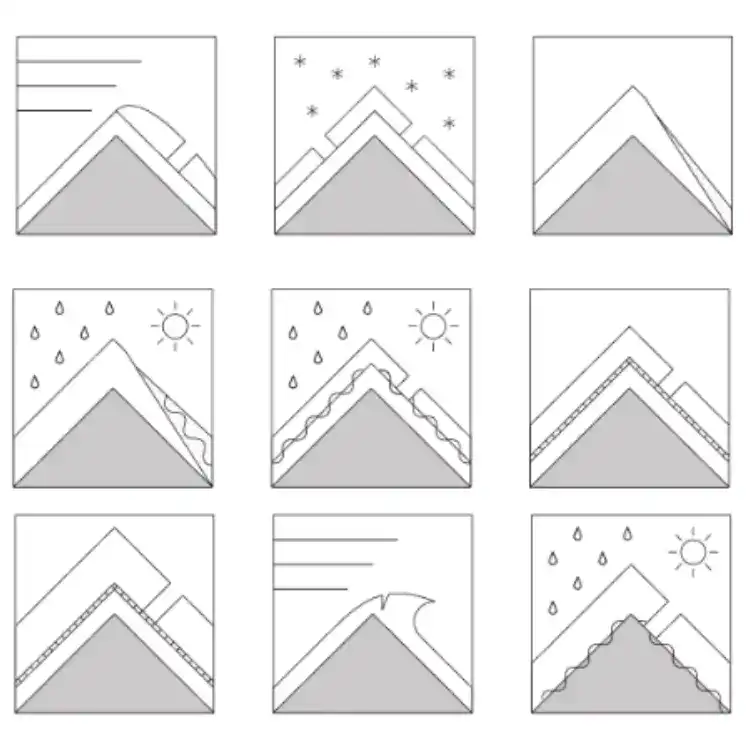
Can you still explain what these mean?
2. You have new touring partners
Maybe you moved. Maybe your longtime partner had a kid. Maybe you joined a group you met on a ski forum. Whatever the reason, you’re now making consequential decisions with people whose risk tolerance, communication style, and honest skill level you don’t actually know.
Spending a day in the field together, with an instructor watching how your group talks to each other, is a much better place to develop the habits you’ll need to make better, and more respectful, decisions as a group.

Photo: Andrew Bradberry
3. You learned on a different snowpack
This is the one we’d underline, and it’s the reason we think this course matters more in Colorado than almost anywhere else.

Colorado sits in what’s called a continental snow climate: cold temperatures, clear skies, and infrequent, low-density snowfall producing a shallow snowpack. That combination drives a steep temperature gradient through the pack, which turns snow crystals into weak, faceted grains and depth hoar. The result is a snowpack with a long memory. A layer that forms in November can stay reactive into February, and human-triggered avalanches remain likely well after the storm that loaded them has passed.
Photo: ORTOVOX / MAX DRAEGER
If you took your AIARE 1 in the Cascades, the Sierra, or coastal Alaska, you learned on a maritime snowpack — deeper, warmer, denser. There, the dominant problems are storm slabs and wind slabs, and the rule of thumb that mostly serves you is timing: give it a day or two after the storm and the pack tends to right itself. That heuristic is well-earned there. It is actively dangerous here.
If you learned in the East — Tuckerman, the Gulf of Slides, the Adirondacks — you got a real education in wind loading and terrain traps, on a scale and in a snowpack that doesn’t much resemble the Tenmile or the Gore.
And if you trained in Europe, you likely learned a different decision framework altogether — the reduction method, 3×3, stop-or-go — against a generally deeper Alpine snowpack and a very different forecast product. The Alps get persistent weak layers too; they just don’t get them with the grinding regularity a shallow continental pack produces.
None of this means your training was inferior. It means your instincts were calibrated somewhere else, and instincts are the part of avalanche education that transfers the worst. A day in Colorado terrain, with a Colorado instructor, on a Colorado snowpack, recalibrates the part a textbook can’t.
4. Your rescue skills are honest-to-goodness rusty
AIARE recommends taking a dedicated Avalanche Rescue course every two years, and most of us don’t. Companion rescue is perishable in a way concept knowledge isn’t — you don’t lose your understanding of a persistent slab, but you absolutely lose minutes off your search time.
The Refresher includes at least one timed companion rescue scenario. Timed, because “I think I’m still pretty quick” and “I was quick on the clock” are different claims.
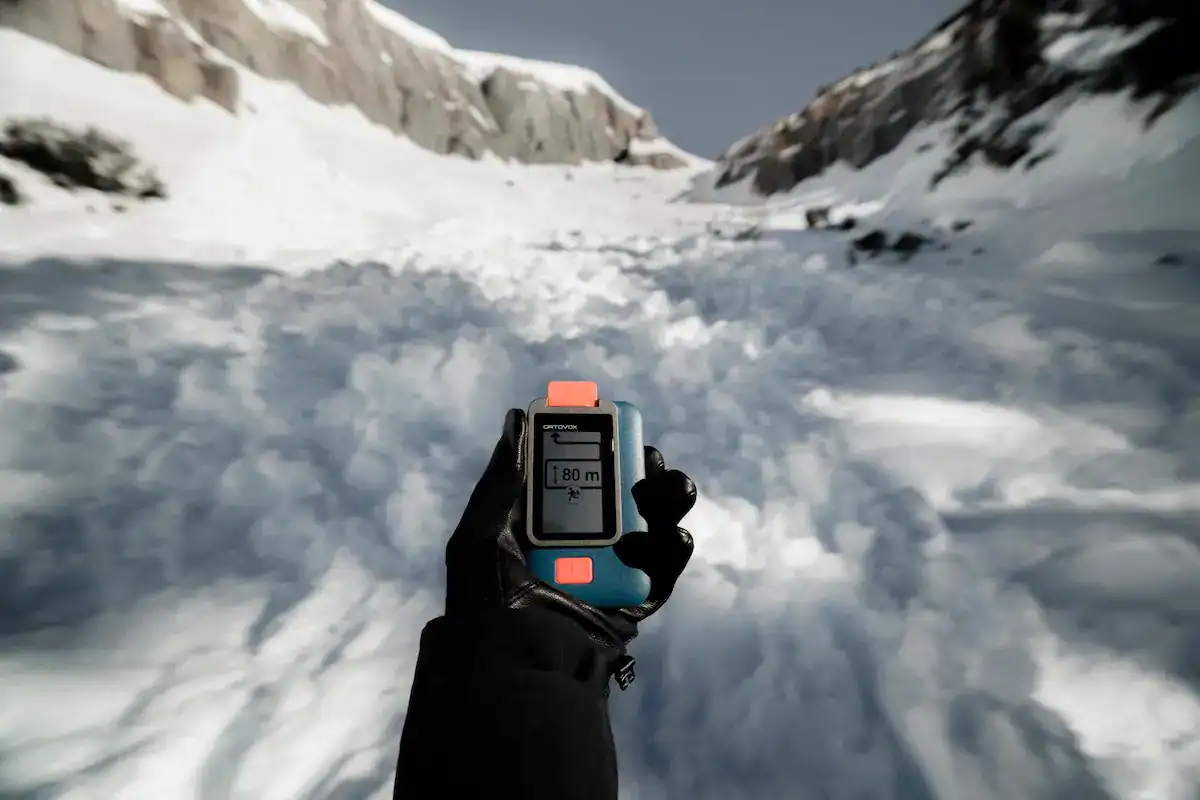
Photo: ORTOVOX / MAX DRAEGER
5. You want to lead, not follow
A quiet thing about this course: you don’t spend the day watching an instructor dig a pit. You plan and lead the tour — up and down. The instructor mentors. That’s the whole design: a mentored setting where you practice each element of the AIARE Decision-Making Framework (PREPARE, PLAN, RIDE SAFELY, TEAMWORK, DEBRIEF) as the person actually responsible for the call.
You’ll finish the day with a written plan for what comes next — whether that’s AIARE 2, AIARE Rescue, or a season of deliberate practice in your Fieldbook.
PREPARE
PLAN
RIDE SAFELY
TEAM WORK
DEBRIEF
Who The AIARE 1 Refresher Course Isn’t For
If you’ve never taken a formal avalanche course, this isn’t your starting point — take an AIARE 1 first. If you’re working toward professional-track training; or want to go deeper on snowpack analysis and complex terrain, AIARE 2 is the better use of your time. If you want to practice finding companions and learning the most efficient way to save them in the event of a multiple burial, take the AIARE Rescue course.
The details
- One day, 8 hours, plus an online learning component
- Meeting point: Silverthorne, Colorado
- $239 — and 10% off if you’ve taken a course with us before
- Max 6 students, 6:1 student-to-instructor ratio
- Prerequisite: AIARE 1 or A3 Rec 1 (or equivalent)
- Includes: AIARE Fieldbook, and complimentary use of an Ortovox transceiver, shovel, probe and pack if you need them
- Age 16+
- Discounted touring rentals available
We’re running four AIARE 1 Refreshers this season, all on Saturdays: December 19, January 9, February 13, and March 6. Groups of six can also request a private date any time during the season by giving us a call at (970) 893-8007.